

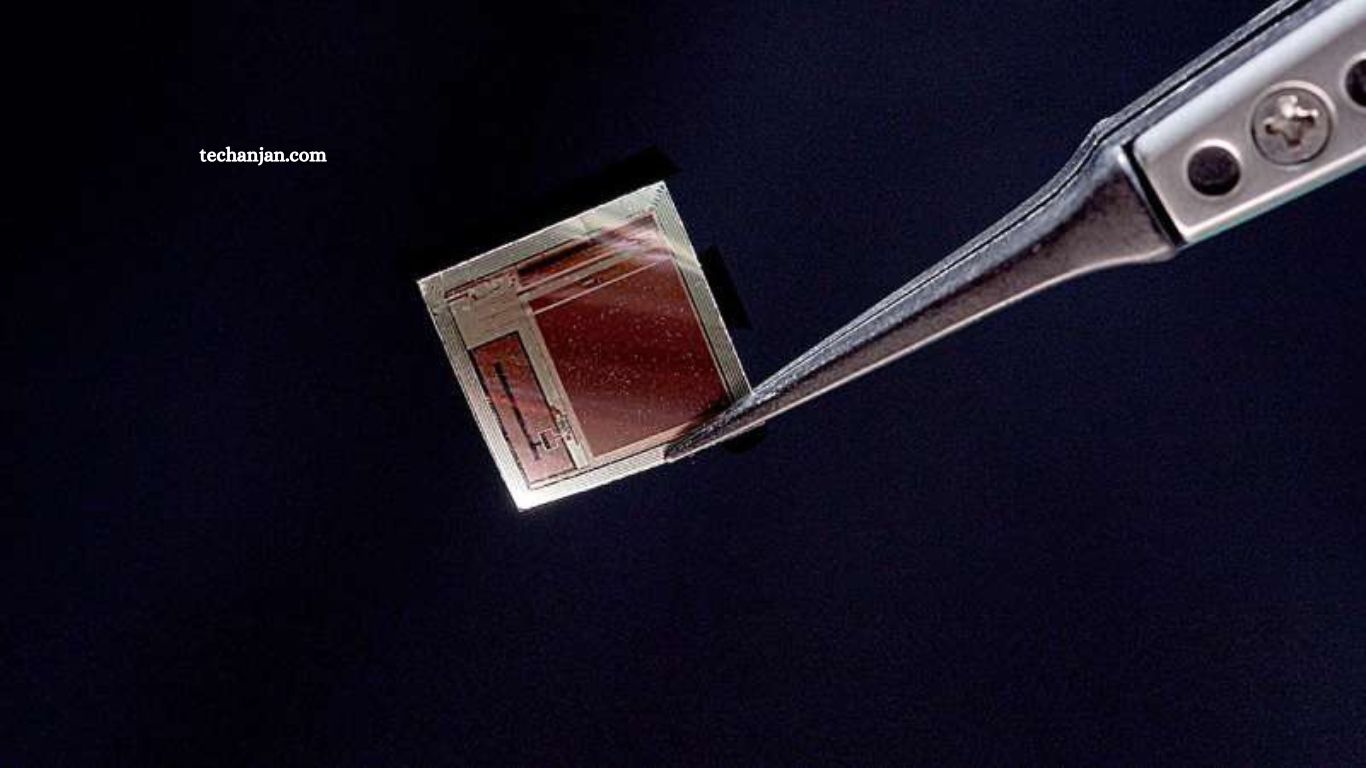
A groundbreaking brain implant promises to revolutionize human-computer interaction and expand treatment options for neurological conditions, including epilepsy, spinal cord injury, ALS, stroke, and blindness. By providing a minimally invasive, high-throughput connection directly to the brain, this technology could enable the management of seizures and the restoration of motor, speech, and visual functions.
Developed by researchers at Columbia University, New York-Presbyterian Hospital, Stanford University, and the University of Pennsylvania, the platform—called the Biological Interface System to Cortex (BISC)—relies on a single silicon chip to create a wireless, high-bandwidth link between the brain and external devices.
Read More: SpaceX Eyes Record-Breaking IPO in 2026 with $1.5 Trillion Valuation
A Breakthrough in Brain-Computer Interface Technology
Most current implantable brain-computer interfaces (BCIs) rely on bulky electronic canisters to house amplifiers, data converters, and other components. These devices often require invasive surgeries, including partial skull removal or the placement of electronics elsewhere in the body, with wires connecting to the brain.
BISC, in contrast, consolidates all these functions into a single, ultra-thin silicon chip. “Our implant is so thin it can slide between the brain and skull, resting like a piece of wet tissue paper,” says Ken Shepard, Lau Family Professor of Electrical Engineering at Columbia University and one of the project’s senior authors.
The system consists of a single-chip implant, a wearable relay station, and custom software that together form a fully integrated BCI platform.
Smaller, Safer, Faster
The BISC implant occupies less than 1/1000th the size of conventional devices and is a flexible CMOS integrated circuit thinned to just 50 μm, with a total volume of approximately 3 mm³. It conforms to the brain’s surface and integrates:
- 65,536 electrodes
- 1,024 simultaneous recording channels
- 16,384 stimulation channels
The implant also includes wireless communication, power management, and data conversion circuits. Its relay station connects via a custom ultrawideband radio, achieving 100 Mbps data bandwidth—over 100 times faster than competing wireless BCIs.
“This integration demonstrates how brain interfaces can become smaller, safer, and dramatically more powerful,” says Shepard.
From Lab to Clinic
To ensure clinical readiness, the team collaborated with Dr. Brett Youngerman, assistant professor of neurological surgery at Columbia and neurosurgeon at NewYork-Presbyterian. They developed minimally invasive surgical techniques to implant the device in preclinical models, demonstrating exceptional recording quality and stability.
“The paper-thin design and lack of penetrating electrodes minimize tissue reactivity and signal degradation over time,” notes Dr. Youngerman. Early studies in human patients for intraoperative recordings are already underway.
Toward Real-World Applications
BISC is being commercialized by Kampto Neurotech, a spin-off founded by lead engineer Dr. Nanyu Zeng. The company aims to produce commercial versions for preclinical research and advance the technology toward widespread human use.
“BISC represents a fundamentally different way of building BCIs, offering technological capabilities that exceed existing devices by orders of magnitude,” says Zeng.
In an era of rapid AI development, BISC demonstrates how ultra-high-resolution neural recording, wireless operation, and advanced decoding algorithms can pave the way for seamless brain-AI interaction, promising transformative benefits for both medicine and human capability.
The Future of Neural Interfaces
By combining innovations in microelectronics, neuroscience, and surgical techniques, BISC points to a future where adaptive neuroprosthetics and brain-AI interfaces could restore lost function and treat neuropsychiatric disorders more effectively than ever before.
As Shepard concludes: “We are moving toward a future where the brain and AI systems can interact seamlessly—not just for research, but for human benefit.”
Frequently Asked Questions
What is BISC?
A next-generation brain-computer interface using a single chip to wirelessly link the brain with external devices.
How is it different from other BCIs?
It’s ultra-thin, minimally invasive, and integrates all electronics on one chip, making it smaller, safer, and faster.
What conditions could it help?
Epilepsy, paralysis, ALS, stroke recovery, and blindness.
How is it implanted?
Inserted through a small skull incision and placed on the brain surface without penetrating the skull.
How does it communicate?
Via a wearable relay station that transfers data wirelessly at up to 100 Mbps.
How many electrodes and channels?
65,536 electrodes, 1,024 recording channels, 16,384 stimulation channels.
Conclusion
The Biological Interface System to Cortex (BISC) represents a major leap forward in brain-computer interface technology. By integrating all essential components into a single, ultra-thin chip, BISC offers a minimally invasive, high-bandwidth connection between the brain and external devices. Its potential to restore motor, speech, and visual function, manage neurological conditions, and enable seamless interaction with AI marks a transformative step for both medicine and human-computer interaction.
