

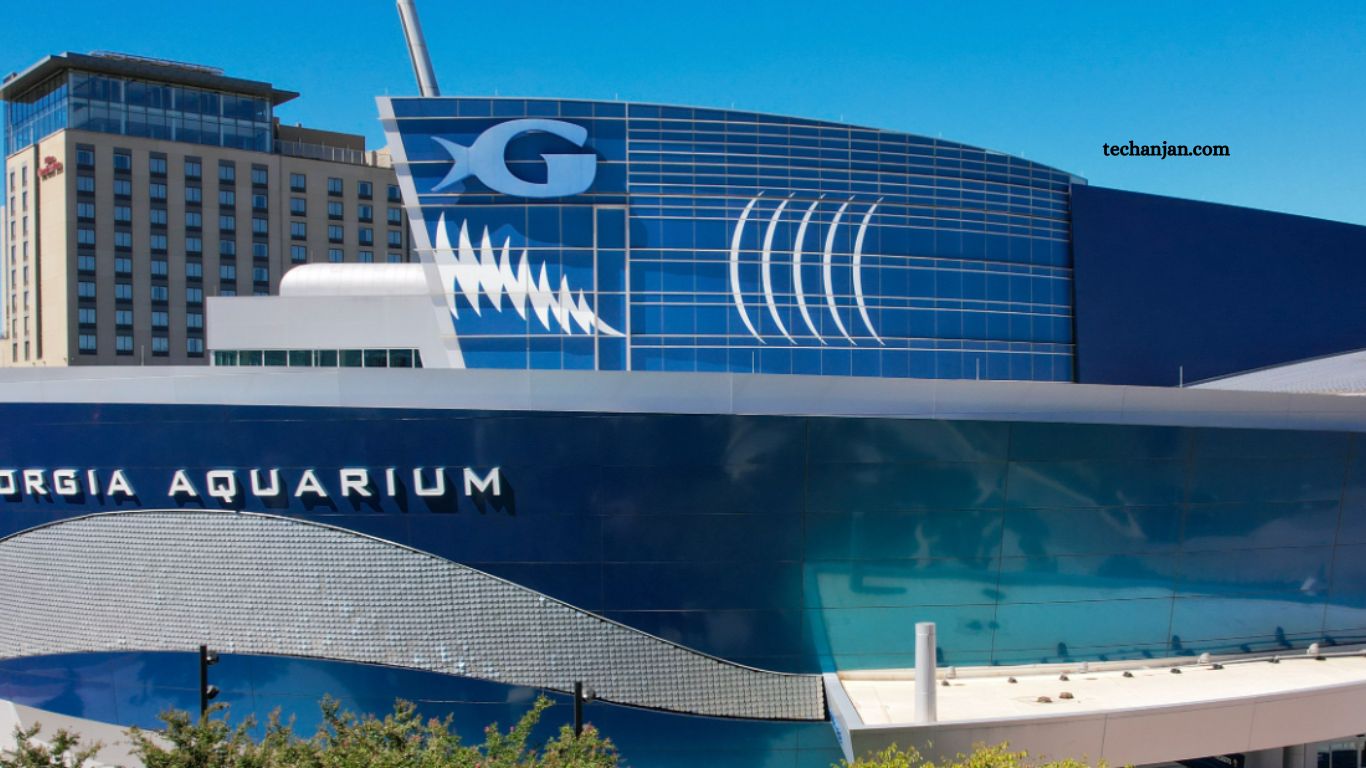
For the past two decades, Georgia Aquarium has offered millions of visitors an unparalleled glimpse into the planet’s diverse underwater ecosystems. Beyond serving as a premier public attraction, the Aquarium advances scientific research and drives conservation efforts for the thousands of species under its care. Collaborations with Georgia Tech have been instrumental in integrating technology and innovation into these initiatives,
Enabling researchers to explore the biology, physiology, and ecology of aquatic life both on-site and in the wild. “Working with Tech allows us to pursue questions no one else can ask and collaborate to find solutions,” said Cameron Perry, a Georgia Tech alumnus and research scientist at the Aquarium. From mapping the first-ever shark genome to studying microscopic ocean organisms, this partnership continues to expand the boundaries of marine science.
Read More: Finch Review: Boosting Productivity Without the Shame Factor
Seeing Is Believing
When the Georgia Aquarium opened, most people in the Western Hemisphere had never seen a whale shark up close. For Cameron Perry, his first visit ignited a fascination with these gentle giants, a curiosity that ultimately led him to Georgia Tech. In 2019, he became one of the inaugural Ph.D. students in Tech’s Ocean Science and Engineering program.

Through a partnership between his program and the Aquarium, Perry transitioned from the classroom to the open waters of St. Helena in the South Atlantic. There, he and a team of researchers deployed trackers and collected unprecedented data on whale shark mating and migration, informing efforts to protect both adults and juveniles in the wild.
After earning his degree, Perry returned to Georgia Aquarium to lead its whale shark and manta ray initiatives. In this role, he is committed to inspiring the next generation of marine scientists, providing the same spark of curiosity he once experienced. “Seeing is believing,” he said. “When you encounter these animals firsthand, you learn to care for them and become a better steward of the environment.”
Innovation Meets Conservation
Over the years, Georgia Tech and Georgia Aquarium have completed more than 15 collaborative research projects, leveraging technology to enhance animal care within the Aquarium and collect critical data on endangered species in the wild.
“Georgia Aquarium and Georgia Tech support each other’s missions because, at the core, we are all striving to better understand the ecosystems these animals inhabit, the species themselves, and how to protect them,” said Cameron Perry.
In 2020, ahead of the opening of the Sharks! Predators of the Deep exhibit, Perry studied the habitat’s transition from freshwater to saltwater, gathering insights that informed future exhibit design, water-quality management, and population density strategies for aquariums worldwide. Recent projects continue to demonstrate how this partnership advances conservation efforts through cutting-edge technology.
Machine Learning in the Tanks
Georgia Tech has emerged as a leader in applying artificial intelligence and machine learning to biological research—an expertise now being applied to monitor animals at Georgia Aquarium. Emily Keaton, a second-year Ph.D. student in biology, is at the forefront of this work. After three years as a dive master in the Aquarium’s dive immersion program, Keaton returned to research at Tech as a member of Patrick McGrath’s lab.
By installing cameras throughout the Aquarium’s largest exhibit, Ocean Voyager, Keaton’s team is using machine learning to enhance data collection and behavioral monitoring. Home to more than 50 species, the exhibit provides an ideal environment for creating datasets and baseline behavioral profiles. This approach enables researchers to quantify behavioral changes, understand when they occur, and assess how environmental factors influence animal behavior, advancing both scientific knowledge and conservation strategies.
A New Type of Enrichment
Enrichment devices provide animals, such as sea otters, with opportunities to engage in behaviors that mimic natural foraging while stimulating cognitive development. To better understand how otters learn to use new devices and how their interactions evolve, Georgia Aquarium partnered with Georgia Tech’s Animal-Computer Interaction Lab to design enrichment tools equipped with motion sensors.
Charles Ramey, a sixth-year Ph.D. student in the School of Interactive Computing, serves as the project’s principal investigator on behalf of the Aquarium. The study, conducted with five otters, allowed researchers to track interaction patterns with unprecedented precision. By transforming playful activities into measurable data, the project offers a potential early-warning system for behavioral changes that could indicate shifts in animal health, supporting both welfare and scientific discovery.
Advanced Tagging
A decade ago, Charles Ramey collaborated with Georgia Aquarium researchers as an undergraduate to develop advanced whale tags using 3D printers at the Georgia Tech Invention Studio. When Cameron Perry and his team sought to create a similar tool for manta rays, Ramey was ready to apply his expertise. The resulting suction cup–style tags, built with components from the Georgia Tech Prototype Lab, enable researchers to track manta rays deeper and farther than ever before while collecting critical environmental data.

Although not a marine biologist, Ramey views his work with the Aquarium as an opportunity to apply technology in the field and support conservation efforts in regions where manta ray populations are declining. The data gathered will provide new insights into manta ray ecology and behavior, shed light on the causes of their endangerment, and inform effective mitigation strategies to protect these vulnerable species.
The Sounds of a Healthy Coral Reef
As climate change continues to threaten the world’s coral reefs, researchers from Georgia Tech and Georgia Aquarium are investigating the underlying causes of reef decline and developing strategies for restoration. A key component of Ph.D. student Skylar Lama’s research focuses on coral reef acoustics, exploring how reef organisms interact with their fluid environment.
Before deploying her hydrophone in the waters of French Polynesia, Lama, a fourth-year student in Ocean Science and Engineering, honed her techniques in the Aquarium’s Tropical Diver exhibit. There, she accounted for the presence of fish, the sound of waves overhead, and other environmental variables, gaining critical experience that would allow her to accurately capture and analyze acoustic data in the field, advancing understanding of reef health and resilience.
Beluga Microbiome Analysis
A new research collaboration between Georgia Aquarium research scientist Patrick Charapata and Lauren Speare, assistant professor in the College of Sciences and director of the Speare Marine Microbial Ecology Lab, is shedding light on the microbiomes of beluga whales. Over the course of a yearlong study, the team will collect and analyze fecal samples from the Aquarium’s belugas to track changes in microbiomes, hormones, and overall physiology.

The research aims to provide the scientific community with a detailed understanding of how diet, environment, age, and other factors influence belugas in both aquarium and wild settings. Speare and Charapata emphasize that the minimally invasive approach offers rich insights into a largely understudied aspect of beluga biology.
Charapata, who frequently conducts research in Alaska—where beluga populations have declined—notes that the data will reduce the need for wild sampling while establishing baselines to identify environmental factors affecting population health. Similar studies at Georgia Tech have analyzed African penguin samples, and a 2018 project notably identified homarine as a biomarker distinguishing healthy from unhealthy whale sharks, highlighting the impact of this type of research on marine conservation.
Hands-On Experience
The collaboration between Georgia Tech and Georgia Aquarium provides invaluable, real-world experience for students pursuing careers in science, engineering, and conservation.
“If you can build suction cups that can withstand the elements of the ocean, there’s not much that Georgia Tech can’t prepare you for,” said Charles Ramey. “These are real engineering challenges that need solutions—whether applied in marine environments, climate change research, or other areas of science and engineering. Engaging students in research is crucial because they will soon be the ones addressing these problems.”
As the Aquarium celebrates its 20th anniversary, Cameron Perry and the staff reflect on two decades of breakthroughs while looking toward future horizons. “Our work is driven by a desire to protect species that have existed for millions of years and by the understanding that we are only a small part of the puzzle,” Perry said.

“Insights into the biology and ecology of these animals not only advance our knowledge, but they also inform the next generation of scientists and conservationists. Science is about building bricks, and through our collaboration with Georgia Tech, we are laying down more bricks to strengthen the foundation for those who will come after us.”
Frequently Asked Questions
How long has Georgia Tech been working with the Aquarium?
The partnership has been ongoing for 20 years, supporting research, innovation, and student training since the Aquarium opened.
What types of research projects have been conducted?
Projects include whale shark genome mapping, machine learning-based behavioral monitoring, coral reef acoustics, beluga microbiome analysis, manta ray tagging, and enrichment studies for sea otters.
How does technology play a role in these studies?
Researchers use AI, machine learning, hydrophones, motion-sensor enrichment devices, 3D-printed tags, and other technological innovations to collect precise data, monitor animal health and behavior, and inform conservation strategies.
How do students benefit from the collaboration?
Students gain hands-on experience with real-world research challenges, from designing tagging devices to monitoring behaviors and conducting field studies. This prepares them for careers in science, engineering, and conservation.
How does the research impact conservation?
Findings help protect endangered species, inform habitat design, track populations, understand environmental impacts, and develop mitigation strategies. Data collected in the Aquarium also reduces the need for invasive sampling in the wild.
Can the public see the results of this research?
Yes. Many projects are integrated into exhibits, such as Ocean Voyager and Sharks! Predators of the Deep allows visitors to learn about marine life, conservation, and ongoing scientific discoveries.
Conclusion
For 20 years, the partnership between Georgia Tech and Georgia Aquarium has exemplified how collaboration between science, technology, and conservation can drive meaningful impact. From pioneering research on whale sharks, manta rays, and belugas to innovative applications of machine learning, enrichment devices, and advanced tagging, the work of this partnership has expanded understanding of marine life both in captivity and in the wild.
