

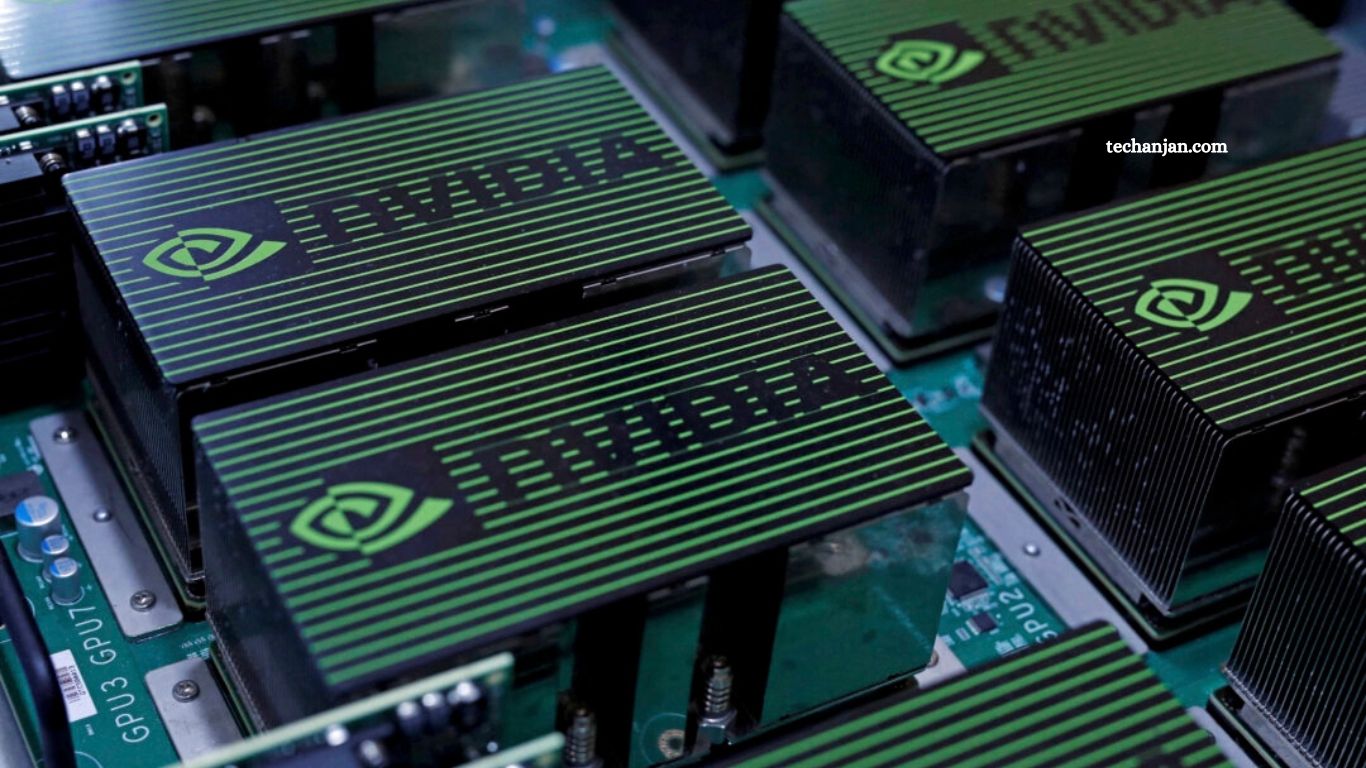
Several Democratic senators have strongly opposed President Donald Trump’s recent decision to allow the sale of Nvidia’s H200 AI chips to Chinese companies, citing serious national security concerns. The H200 chips represent a significant technological advantage, far surpassing China’s current capabilities, and senators warn that exporting them could undermine U.S. leadership in artificial intelligence. Previously, only reduced-capability versions of Nvidia’s Hopper-line chips were permitted for sale to China.
Trump announced the policy on December 8 via Truth Social, emphasizing that next-generation chips scheduled for release in 2026 would remain restricted. Lawmakers and national security experts argue that access to these advanced chips could enhance China’s military, economic, and AI capabilities, prompting calls for the administration to reconsider the decision and protect America’s competitive edge.
Concerns Over National Security and AI Dominance
In a joint statement released on December 9, the senators emphasized that the H200 chips represent a significant technological advantage for the United States. “The H200s are vastly more capable than anything China can produce. Providing them to Beijing would squander America’s primary advantage in the global AI race,” the statement read, urging the administration to reverse the policy.
Previously, Nvidia had only sold China lower-capability versions of its Hopper-line AI chips, including the H800 and H20 models.
Trump’s Announcement
President Trump announced via Truth Social on December 8 that U.S. authorities would allow the sale of the H200 chip to “approved customers” in China. He criticized existing export controls that require American companies to produce “degraded” versions of AI chips for foreign sales. Trump clarified, however, that Nvidia’s next-generation Blackwell and Rubin chip lines, scheduled for release in 2026, would remain restricted from Chinese markets.
Chinese Dependence on U.S. AI Chips
Chinese AI companies have relied heavily on Nvidia’s H20 chips, as domestic chipmakers have yet to produce equivalents at scale due to technological and regulatory limitations. Major Chinese tech firms, including ByteDance, Alibaba, Tencent, and DeepSeek, currently utilize H20 chips for AI development.
Key Senators Leading Opposition
The senators opposing the policy include Jeanne Shaheen (D-N.H.), Chris Coons (D-Del.), Jack Reed (D-R.I.), Elizabeth Warren (D-Mass.), Brian Schatz (D-Hawaii), Andy Kim (D-N.J.), Michael Bennet (D-Colo.), and Elissa Slotkin (D-Mich.). Six of the eight serve as ranking members on Senate committees overseeing national security.
The senators warned that access to advanced AI chips could enable China’s military to enhance its weapons, conduct more effective cyberattacks against U.S. infrastructure, and strengthen its economic and manufacturing sectors.
Implications for Chinese AI Companies
Reports indicate that China’s AI platform DeepSeek, which plans to adopt domestically produced chips, has been slowed by limited access to U.S. technology. The senators argued that permitting Chinese companies to acquire H200 chips would eliminate a critical barrier and accelerate their AI capabilities.
“Senate Democrats and Republicans alike understand that the 21st century will be defined by whether leading AI systems are built on the values of free societies or the authoritarian values of the Chinese Communist Party,” the statement concluded. “President Trump must reverse course to preserve American leadership in AI.”
Bipartisan Concerns and Legislative Action
U.S. lawmakers across party lines have consistently expressed concern about Chinese access to advanced AI and semiconductor technology, including through illicit means such as smuggling or falsifying records. Recent legislation has aimed to strengthen export controls and close loopholes.
On December 4, a bipartisan group of senators introduced a bill to codify restrictions preventing the sale of Nvidia H200 chips to China.
House Select Committee Weighs In
The House Select Committee on the CCP also criticized the decision on December 9, highlighting the advanced capabilities of the H200 chip relative to Chinese-produced alternatives. According to publicly available analysis, the H200 delivers 32% more processing power and 50% higher memory bandwidth than China’s most advanced chip.
The committee warned that Chinese companies could replicate the technology, mass-produce it, and attempt to challenge Nvidia’s competitive position.
Frequently Asked Questions
What decision did President Trump make regarding Nvidia H200 chips?
On December 8, President Trump announced that the U.S. would allow the sale of Nvidia’s H200 AI chips to “approved customers” in China, marking the first time these advanced chips could be exported to Chinese companies.
Why are some U.S. senators opposing this decision?
Several Democratic senators argue that allowing China access to H200 chips threatens national security and undermines U.S. dominance in AI technology. They warn that these chips could strengthen China’s military, enhance cyberattack capabilities, and boost economic and manufacturing power.
Which senators are leading the opposition?
The opposition comes from Senators Jeanne Shaheen (D-N.H.), Chris Coons (D-Del.), Jack Reed (D-R.I.), Elizabeth Warren (D-Mass.), Brian Schatz (D-Hawaii), Andy Kim (D-N.J.), Michael Bennet (D-Colo.), and Elissa Slotkin (D-Mich.). Six of them serve as ranking members on Senate committees related to national security.
What chips has Nvidia previously sold to China?
Nvidia has previously sold lower-capability versions of its Hopper-line AI chips to China, including the H800 and H20 models.
Are all Nvidia chips being exported to China?
No. Trump specified that the upcoming Blackwell and Rubin chip lines, scheduled for 2026, will not be available for export to China.
How dependent are Chinese companies on U.S. AI chips?
Chinese AI firms, including ByteDance, Alibaba, Tencent, and DeepSeek, rely heavily on Nvidia chips like the H20. Domestic chipmakers have not yet produced comparable technology at scale.
Conclusion
The debate over the export of Nvidia’s H200 AI chips to China highlights the growing tension between technological advancement and national security. While the Trump administration frames the decision as a step toward freer trade and technological innovation, U.S. lawmakers warn it could erode America’s strategic advantage in artificial intelligence.
