

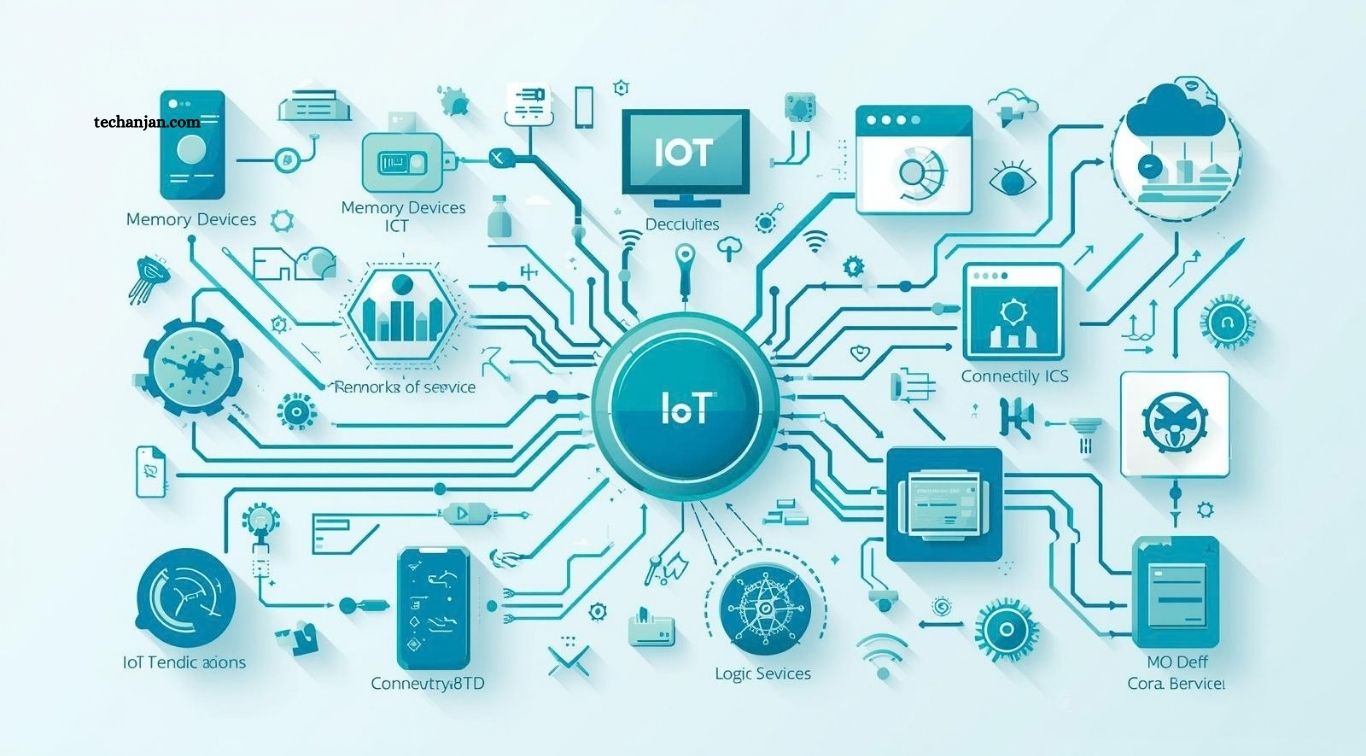
Smart devices and IoT technology are changing how people live, work, communicate, and manage everyday tasks. From smartwatches and connected home appliances to industrial sensors and intelligent vehicles, connected technology has become an important part of modern life. The rapid growth of wireless networks, artificial intelligence, cloud computing, and affordable sensors has accelerated IoT adoption across different industries.
The rise of smart devices is creating a more connected world where machines can collect data, communicate with each other, and respond to user needs. Businesses are also using IoT technology to improve efficiency, reduce costs, enhance customer experiences, and make better decisions.
Read More: Future Technology Predictions for the Next Decade in 2026
What Is IoT Technology?
The Internet of Things (IoT) refers to a network of physical devices connected to the internet. These devices can collect, share, and process data through sensors, software, and communication technologies.
Examples of IoT devices include:
- Smart thermostats
- Fitness trackers
- Smart security cameras
- Connected refrigerators
- Smart lighting systems
- Industrial sensors
- Connected vehicles
- Smart speakers
- Healthcare monitoring devices
IoT technology allows these devices to communicate with users, applications, and other connected systems. This creates automated and data-driven environments.
Why Are Smart Devices Becoming Popular?
Smart devices are becoming popular because they offer convenience, automation, and better control. Users can monitor or manage many devices through smartphones, voice assistants, or dedicated applications.
For example, a smart home system can allow homeowners to control lights, security cameras, door locks, and thermostats remotely. Similarly, fitness trackers can monitor physical activity, sleep patterns, heart rate, and other information.
Affordable hardware and improved internet connectivity have also made smart technology accessible to more people.
The Role of Artificial Intelligence in IoT
Artificial intelligence is making IoT systems more intelligent. Traditional connected devices mainly collect and transmit information, while AI-powered devices can analyze data and identify patterns.
AI can help smart devices:
- Understand user behavior
- Predict potential problems
- Automate repetitive tasks
- Improve energy efficiency
- Provide personalized recommendations
- Detect unusual activity
For example, an AI-powered security system can analyze camera activity and identify unusual movement. A smart heating system can learn household routines and automatically adjust temperature settings.
Smart Homes and Connected Living
Smart homes are one of the most visible applications of IoT technology. Connected devices can work together to create automated living environments.
Smart lighting can adjust brightness based on schedules or activity. Smart thermostats can regulate temperature automatically. Connected security systems can send alerts when unexpected activity is detected.
Smart appliances can also improve household efficiency. A connected washing machine, for instance, may provide notifications when a cycle finishes or identify maintenance requirements. The combination of IoT and AI is making smart homes more responsive and personalized.
IoT in Healthcare
Healthcare is another major area benefiting from connected technology. Wearable devices can collect health-related information and help users monitor their daily activities.
IoT-enabled medical devices can support remote monitoring, patient management, and healthcare data collection. Doctors and healthcare professionals can potentially use connected information to identify changes and make informed decisions.
Remote monitoring can also provide valuable support for patients who need regular observation without visiting a healthcare facility frequently.
IoT in Business and Industry
Businesses are adopting IoT technology to improve operational efficiency. Connected sensors can monitor equipment, production systems, inventory, and environmental conditions.
Industrial IoT can help companies:
- Monitor machinery performance
- Detect equipment problems
- Reduce downtime
- Track inventory
- Improve production processes
- Manage energy consumption
- Improve workplace safety
Predictive maintenance is one important use case. Sensors can identify unusual equipment behavior and help businesses address potential problems before major failures occur.
Smart Cities and IoT Technology
IoT is also supporting the development of smart cities. Connected infrastructure can help cities manage resources and improve public services.
Smart traffic systems can collect information about road conditions and traffic patterns. Connected streetlights can adjust lighting based on activity. Smart waste management systems can monitor collection requirements.
IoT technology can also support parking management, public transportation, environmental monitoring, and energy management. These applications can help cities become more efficient while improving the experience of residents.
The Importance of 5G for IoT
Modern connectivity is an important part of IoT development. 5G networks can provide faster communication, lower latency, and support for large numbers of connected devices.
These capabilities can benefit applications that require quick communication between devices. Autonomous transportation, industrial automation, smart cities, and advanced healthcare systems can all benefit from reliable connectivity. As network infrastructure continues to improve, more IoT applications are expected to become practical.
IoT Security and Privacy Challenges
Despite its benefits, IoT technology also creates security and privacy concerns. Connected devices collect large amounts of information, making data protection extremely important.
Weak passwords, outdated software, insecure networks, and poor device configurations can create security risks. A compromised smart device may expose personal information or provide unauthorized access to connected systems.
Users and businesses should follow basic security practices, including:
- Using strong and unique passwords
- Keeping device software updated
- Securing home and business networks
- Enabling multi-factor authentication when available
- Reviewing device permissions
- Buying devices from trusted manufacturers
Manufacturers also have an important role in improving IoT security through better encryption, secure software updates, and stronger authentication systems.
The Future of Smart Devices and IoT
The future of IoT technology is closely connected with artificial intelligence, edge computing, cloud platforms, advanced connectivity, and automation. Devices are expected to become more capable of processing information and making decisions with limited human involvement. Smart technology may become increasingly integrated into homes, workplaces, vehicles, healthcare systems, and public infrastructure.
Edge computing can also help process data closer to where it is generated. This can reduce delays and limit the amount of information that needs to travel to remote servers. As these technologies develop, IoT systems could become more intelligent, efficient, secure, and personalized.
Frequently Asked Questions
What is IoT technology?
IoT technology connects physical devices to the internet so they can collect, share, and process data.
What are smart devices?
Smart devices are internet-connected products that can perform automated tasks and communicate with other systems.
How does IoT improve daily life?
IoT provides automation, convenience, remote control, better efficiency, and real-time information.
How is AI used in IoT?
AI analyzes IoT data, identifies patterns, predicts problems, and helps devices make smarter decisions.
Is IoT technology secure?
IoT can be secure with strong passwords, regular updates, encrypted connections, and proper security practices.
What is the future of IoT technology?
IoT is expected to become more intelligent through AI, 5G, edge computing, automation, and advanced connected devices.
Conclusion
The rise of smart devices and IoT technology is transforming everyday life and modern industries. Connected devices are helping people automate tasks, monitor information, improve convenience, and manage resources more efficiently. From smart homes and wearable technology to industrial automation and smart cities, IoT has applications across almost every major sector. However, security, privacy, compatibility, and responsible data management remain important challenges.

1 Comment
Pingback: Best Laptops for Work, Gaming, and Study - TechAnjan