

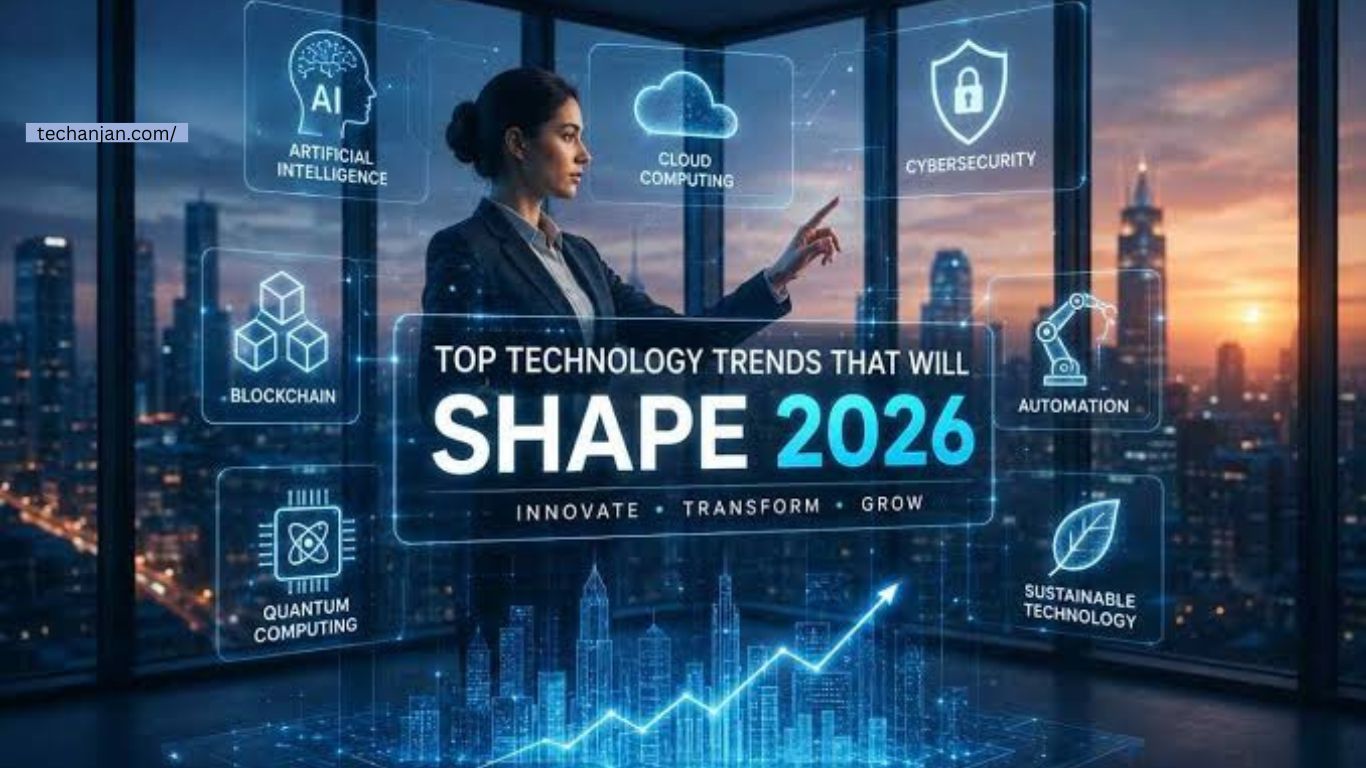
Technology continues transforming industries, businesses, education, healthcare, and everyday life at an incredible pace. Every new breakthrough creates fresh opportunities while changing the way people communicate, work, learn, and solve complex challenges. Organizations worldwide invest heavily in advanced technologies to improve efficiency, strengthen security, enhance customer experiences, and remain competitive in fast-changing markets.
Understanding emerging technology trends helps businesses prepare for future challenges and identify opportunities before competitors. From artificial intelligence to sustainable innovation, modern technology is creating a smarter, faster, and more connected world that promises long-term growth and remarkable digital transformation.
Read More: Strategic Tech Wise Lab Review: Business & Tech Synergy
Artificial Intelligence Continues Leading Innovation
Artificial intelligence remains one of the strongest forces driving technological progress. AI systems now analyze massive amounts of data within seconds, helping businesses make accurate decisions through predictive insights. Customer service has become more efficient through intelligent chatbots, while automated systems improve productivity across industries.
Healthcare professionals use AI for faster disease detection and personalized treatment recommendations. Financial institutions rely on intelligent algorithms for fraud detection and risk analysis. Manufacturing companies integrate AI-powered robotics to improve production quality while reducing operational costs. As AI continues evolving, its influence across every sector will become even stronger.
Internet of Things Creates Smarter Living
The Internet of Things connects physical devices through intelligent networks that continuously exchange information. Smart homes now feature connected appliances, lighting systems, security cameras, and voice-controlled assistants that simplify everyday routines.
Businesses benefit from IoT through predictive maintenance, inventory tracking, and real-time equipment monitoring. Industrial facilities use connected sensors to reduce downtime and improve operational efficiency. Cities also embrace smart technologies to manage traffic, energy consumption, and public safety more effectively.
5G Technology Expands Digital Possibilities
High-speed 5G networks significantly improve communication speed and reduce latency. This advancement supports seamless video streaming, cloud gaming, remote collaboration, and connected devices without noticeable delays.
Industries requiring instant communication, such as healthcare, autonomous transportation, and manufacturing, gain enormous advantages through faster data transmission. As global 5G infrastructure expands, businesses will unlock new opportunities for innovation and digital transformation.
Cloud Computing Powers Business Growth
Cloud technology continues changing how organizations store, manage, and process information. Instead of investing heavily in physical infrastructure, companies use cloud platforms to access scalable computing resources whenever needed.
Remote work has accelerated cloud adoption by allowing employees to collaborate securely from different locations. Businesses also benefit from automatic software updates, improved disaster recovery, enhanced security, and flexible resource management that supports long-term growth.
Cybersecurity Becomes More Critical
Growing digital dependence increases cybersecurity challenges for businesses and individuals alike. Cybercriminals constantly develop sophisticated attack methods targeting sensitive information, financial systems, and business operations.
Modern cybersecurity combines artificial intelligence, behavioral analytics, multi-factor authentication, and zero-trust architecture to defend digital assets. Organizations also prioritize employee awareness because human error remains one of the leading causes of security breaches.
Blockchain Technology Moves Beyond Cryptocurrency
Blockchain technology offers transparent, secure, and tamper-resistant digital records across various industries. Although widely recognized through cryptocurrencies, blockchain now supports supply chain management, digital identity verification, healthcare records, and secure financial transactions.
Businesses value blockchain because every transaction becomes traceable while reducing fraud and improving operational transparency. Governments and enterprises continue exploring blockchain applications for secure document management and public services.
Automation Transforms Modern Workplaces
Automation enables businesses to complete repetitive tasks faster while reducing operational costs. Intelligent software handles data processing, customer support, scheduling, accounting, and workflow management with minimal human intervention.
Manufacturing industries increasingly adopt robotic automation for precision, speed, and consistent product quality. Employees benefit by focusing on strategic planning, creativity, innovation, and complex decision-making instead of repetitive administrative work.
Green Technology Supports Sustainable Development
Sustainability has become a major priority across industries. Green technology focuses on reducing environmental impact while improving energy efficiency and conserving natural resources.
Renewable energy systems, electric vehicles, smart power grids, and eco-friendly manufacturing processes continue gaining widespread adoption. Businesses embracing sustainable innovation often improve brand reputation while meeting environmental regulations and reducing long-term operating costs.
Extended Reality Enhances Digital Experiences
Extended Reality, including Virtual Reality, Augmented Reality, and Mixed Reality, creates immersive digital experiences across entertainment, education, healthcare, and retail.
Educational institutions use immersive simulations for practical learning experiences. Retail companies allow customers to visualize products before purchasing. Healthcare professionals utilize virtual environments for medical training and surgical preparation, improving learning outcomes and operational accuracy.
Quantum Computing Opens New Possibilities
Quantum computing represents one of the most promising technological breakthroughs for solving highly complex problems beyond traditional computing capabilities.
Researchers expect quantum systems to accelerate scientific discoveries, pharmaceutical development, climate modeling, logistics optimization, and advanced cybersecurity solutions. Although still developing, quantum computing holds enormous potential for industries requiring exceptional processing power.
Digital Transformation Drives Competitive Advantage
Digital transformation extends beyond adopting new software. It involves redesigning business processes, improving customer experiences, strengthening operational efficiency, and embracing innovation throughout every department.
Organizations investing in digital transformation adapt faster to market changes, respond quickly to customer expectations, and build stronger competitive advantages. Combining artificial intelligence, cloud computing, data analytics, automation, and cybersecurity creates a strong foundation for sustainable business success.
The Future of Technology
Future technological progress will focus on intelligence, connectivity, sustainability, and automation. Businesses embracing innovation today position themselves for long-term success in an increasingly competitive digital economy. Consumers will enjoy smarter products, personalized services, faster communication, and improved digital experiences powered by continuous technological advancement.
Emerging technologies will continue reshaping industries while creating new careers, business opportunities, and economic growth. Organizations that remain adaptable and invest strategically in innovation will lead the next generation of global digital transformation.
Frequently Asked Questions
What is the biggest technology trend today?
Artificial intelligence (AI) is the leading technology trend because it improves automation, decision-making, and productivity across many industries.
Why is 5G technology important?
5G provides faster internet speeds, lower latency, and better connectivity for smart devices, businesses, and emerging technologies.
How does cloud computing benefit businesses?
Cloud computing reduces infrastructure costs, improves scalability, enhances collaboration, and supports secure remote work.
What role does cybersecurity play in the future?
Cybersecurity protects sensitive data, prevents cyberattacks, and ensures safe digital operations for businesses and individuals.
How is the Internet of Things (IoT) changing daily life?
IoT connects smart devices, making homes, workplaces, and cities more efficient through real-time monitoring and automation.
Why should businesses follow emerging technology trends?
Keeping up with technology trends helps businesses stay competitive, improve efficiency, drive innovation, and meet changing customer needs.
Conclusion
Technology continues evolving faster than ever, influencing every aspect of modern life and business. Artificial intelligence, cloud computing, cybersecurity, blockchain, automation, green technology, IoT, 5G, extended reality, and quantum computing represent powerful innovations driving future growth. Businesses that understand these trends and adopt relevant technologies can improve efficiency, strengthen competitiveness, and deliver greater value to customers.
